TALK [MERL Seminar Series 2026] Tess Smidt presents talk titled Adventures in Building Structure into Models: Lessons from Constructing Euclidean Neural Networks for Physics
Date released: September 23, 2026
-
TALK [MERL Seminar Series 2026] Tess Smidt presents talk titled Adventures in Building Structure into Models: Lessons from Constructing Euclidean Neural Networks for Physics (Learn more about the MERL Seminar Series.)
Date & Time:
Wednesday, August 19, 2026; 11:00 AM
-
Abstract:
Symmetry provides a powerful lens for building machine learning models that interact with scientific data. Euclidean neural networks (E(3)NNs) make this concrete: architectures that encode transformation laws through group representations, enabling models to operate on geometric and tensorial data while respecting the structure of physical systems. In this talk, I’ll share lessons from building and applying these models in practice. Incorporating symmetry shapes how data is represented, how models learn, and how they are optimized, while introducing new trade-offs in expressivity and computation.
-
Speaker:
Tess Smidt
MIT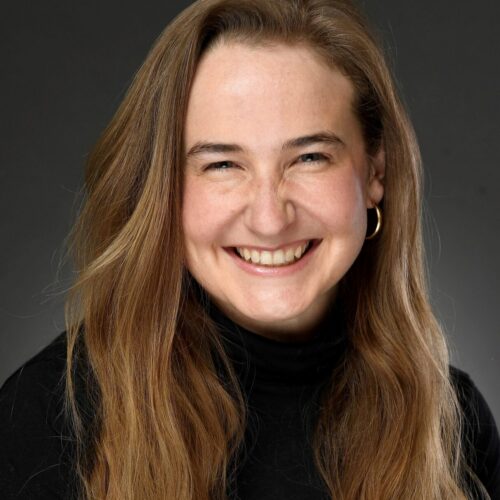 Tess Smidt is an Associate Professor of Electrical Engineering and Computer Science at MIT and Principal Investigator of the Atomic Architects group in the Research Laboratory of Electronics. Her research sits at the intersection of physics, geometry, and machine learning, where she develops algorithms that embed physical and geometric structure into AI systems to model and design molecules, materials, and other physical systems. Tess is a 2025 AI2050 Early Career Fellow of Schmidt Sciences and a recipient of the DOE Early Career Award and Air Force Office of Scientific Research (AFOSR) Young Investigator Research Program (YIP) Award. Before joining the MIT faculty, she was the Alvarez Postdoctoral Fellow in Computing Sciences at Lawrence Berkeley Na8onal Laboratory and a Software Engineering Intern at Google Accelerated Science, where she co-developed the first Euclidean symmetry-equivariant neural networks, architectures which naturally handle 3D geometry and geometric tensor data. She earned her SB in Physics from MIT and her PhD in Physics from the University of California, Berkeley.
 -
MERL Host:
-
Research Areas: